I came to a realization the other night about writing, an epiphany which probably seems obvious to writers who've been in the game for a while. Lately, I've been searching for places to submit some of my short, prose fiction. I was about to take down a list of publications when it struck me: What will getting a short story published do for me? What do I hope to parlay out of that experience? Truly, I don't mean to bash short stories, short story publications, or short story writers - "Stories" by John Cheever is one of my favorite books. Forgetting the fact that the competition in the short fiction market is supremely daunting, publication in a small press does not typically equal further accolades, a book deal, or even a relationship with a publisher. So unless I singularly desire to write short stories for a living or see myself as the next Tobias Wolff, it's ridiculous to focus on this form of writing. I would (and hopefully will) be better served focusing on my interest in young adult fiction, screenwriting, satire, comics, and non-fiction prose.
All of this lead me back to an age-old pondering of what it means to be a writer. I used to place a lot of stipulations on this label - before calling myself a "writer," I had to earn some money doing it or, at the very least, see some of my work published. Now, I look at writing similarly to the way I view running, one of my other pastimes. Entering a marathon or half-marathon or 10K - or somehow, miraculously, winning any of these races - is not the sole defining characteristic of being a runner. That reeks of elitism. A runner is a runner because of the simple, arduous task of hitting the pavement, counting the miles, weathering the aches, and doing it again the next day. It's a little hokey, I know, but I've discovered a positive outlook is essential in both running and writing.
Monday, March 30, 2009


Friday, March 27, 2009
Where The Wild Things Are
Rarely have I found myself so excited over an upcoming movie, let alone one adapted from a picture book I loved when I was young, but after seeing the just-released trailer for "Where the Wild Things Are" and discovering that it was directed by Spike Jonze and co-written by Dave Eggers, I'm almost totally won over.
I'm not sure why - maybe it's recent stress - but the trailer kinda makes me wanna bawl ---
And here's the splendid movie poster ---

I'm not sure why - maybe it's recent stress - but the trailer kinda makes me wanna bawl ---
And here's the splendid movie poster ---

Saturday, March 7, 2009
For the time being...
Hello readers. I realize I gave forewarning about this about two weeks ago, but for the time being P.O.A.B. will be put on hold while I'm waiting to hear back from grad programs. I sincerely hope to continue this little project, even while I'm in the midst of some other ventures (e.g. "The Modest Knight", "The Pith Report", etc.). I'll still try to post as often as I can, but I can't promise any regularity.
Thank you for reading.
I love you all.
Thank you for reading.
I love you all.
Monday, March 2, 2009
New website
Hey all. With the help of a good friend - one who actually knows what he's doing - I am in the process of moving my satire blog from Blogspot to its own site. This way, I'm hoping to gain more net traffic (and maybe parlay it into some sort of part-time job). For those interested in seeing the new setup, it's http://www.pithreport.com/. Eventually, I'd also like to move the P.O.A.B. blog to a more personalized site but until further notice I'll be here (when I find the time).
Sometimes I wish I were a hot dog...

(photo by D. Shrigley)
...or a balloon...

(photo by D. Shrigley)
...because then I could stay in bed all day.
Sometimes I wish I were a hot dog...

(photo by D. Shrigley)
...or a balloon...

(photo by D. Shrigley)
...because then I could stay in bed all day.
Friday, February 27, 2009
The tables have turned, buckle your seat belts, fear the reaper, checkmate...
I'm not a fan of "CSI" in any of its geographic incarnations (e.g. Miami, New York, Las Vegas, Akron, etc). It's poorly written, totally unbelievable, and ambiently lit for no good reason. (Without fail, the crime scene labs look like night clubs and the lab techs are all dressed like they're searching for someone to take them home). Even so, "CSI: Miami" reaches a terrible depth unmatched by its counterparts solely due to David Caruso's presence. Does anyone actually, honestly, unironically enjoy his act? He seems to have come to us straight from the William Shatner School of Acting, sans a needed dose of humor or self-deprecation. (I still hope his character is supposed to be so over-the-top). Don't believe me? Just give this a quick view ---
(David Caruso one-liners on "CSI: Miami")
(David Caruso one-liners on "CSI: Miami")
Wednesday, February 25, 2009
List of the Week: Eight Words or Phrases Forever Ruined By Pop Culture
There is a definite baggage that hangs over the English language anymore. To borrow a tired phrase, "loaded words" populate much of our discourse anymore. And even though I enjoy quoting movies and songs as much as the next person (and usually more so), I can't help but think we've lost something (however minor) by not being able to say certain words or phrases.
Eight Words or Phrases Forever Ruined By Pop Culture:
1. "I just called to say I love you" - This 1980's Stevie Wonder hit is, let's be honest, god-awful in comparison to his earlier work. Even so, it's impossible to deny the wonderful sentiment that it conveys. But try saying this to someone without the awful song sticking in your head for the next few days.
2. "Just do it" - It may be the best ad slogan ever penned. And this is not because it represents the height of language, but because whenever anyone says it, outside of a Nike framework, it draws everyone back to that specific brand.
3. "Stop" - Question: How does a word like "stop" become ruined? Answer: M.C. Hammer, Vanilla Ice, and Diana Ross.
4. "I want the truth" - I challenge anyone to say this (even in the highest height of seriousness) and not silently hear the rejoinder: "You can't handle the truth!"
5. "Elementary" - It's totally demeaning and it has no correlative in the classic novels by Sir Arthur Conan Doyle but, my dear Watson, we're stuck with it.
6. "Domo arigato" - Mr. Roboto. STYX. 'Nuf said.
7. "Tastes great" - ...less filling," said all the dorks in the room.
8. "Gimme a break" - Kit Kat gave us not only one of the tastiest candy bars in history, but also one of the catchiest jingles ever written. Don't believe me? Gimme a break...
Eight Words or Phrases Forever Ruined By Pop Culture:
1. "I just called to say I love you" - This 1980's Stevie Wonder hit is, let's be honest, god-awful in comparison to his earlier work. Even so, it's impossible to deny the wonderful sentiment that it conveys. But try saying this to someone without the awful song sticking in your head for the next few days.
2. "Just do it" - It may be the best ad slogan ever penned. And this is not because it represents the height of language, but because whenever anyone says it, outside of a Nike framework, it draws everyone back to that specific brand.
3. "Stop" - Question: How does a word like "stop" become ruined? Answer: M.C. Hammer, Vanilla Ice, and Diana Ross.
4. "I want the truth" - I challenge anyone to say this (even in the highest height of seriousness) and not silently hear the rejoinder: "You can't handle the truth!"
5. "Elementary" - It's totally demeaning and it has no correlative in the classic novels by Sir Arthur Conan Doyle but, my dear Watson, we're stuck with it.
6. "Domo arigato" - Mr. Roboto. STYX. 'Nuf said.
7. "Tastes great" - ...less filling," said all the dorks in the room.
8. "Gimme a break" - Kit Kat gave us not only one of the tastiest candy bars in history, but also one of the catchiest jingles ever written. Don't believe me? Gimme a break...
Monday, February 23, 2009
Retiring a character
For those of you haven't heard this newsbit ---
CNN, MTV, the Associate Press, and other interested news sources recently reported on a certain website's goal to retire the Joker character from any future Batman productions. In deference to Heath Ledger's now Academy Award winning performance, "The Ultimate Joker" seeks to forever "withdraw" the character, rather ungrammatically stating: "It’s impossible to imagine, impossible to draw or dub much less repeat the performance." As a result, over 30,000 supporters have signed a petition which the site proprietors hope to submit to the production company in control of the Batman franchise.
Though I find the idea mildly amusing - treating Ledger's Joker like Wayne Gretzky's retired #99 jersey - I can't quite get on board with it. Interpretation is a large part of what makes any film, play, or production great. It's what transformed "The Godfather" from a rambling, cliche novel into an epic film about family, power, and the American dream. It gave us Sean Connery and Daniel Craig as James Bond. Finally, interpretation, at the direction of Christopher Nolan, is what rescued us film-lovers from the terribly campy Batman franchise. (It's also worthwhile to recall the initial skepticism Batman fans expressed at the casting of Ledger, particularly following Jack Nicholson's iconic performance in the '89 version helmed by Tim Burton). So while I agree that there may never be a Joker quite like Ledger's, it does a disservice to the author, director, and the story itself to say an actor should be the last incarnation of a character. Besides, who wouldn't be a little curious to see Crispin Glover or Daniel Day Lewis' version of the Joker?
(Heath Ledger as the Joker)
CNN, MTV, the Associate Press, and other interested news sources recently reported on a certain website's goal to retire the Joker character from any future Batman productions. In deference to Heath Ledger's now Academy Award winning performance, "The Ultimate Joker" seeks to forever "withdraw" the character, rather ungrammatically stating: "It’s impossible to imagine, impossible to draw or dub much less repeat the performance." As a result, over 30,000 supporters have signed a petition which the site proprietors hope to submit to the production company in control of the Batman franchise.
Though I find the idea mildly amusing - treating Ledger's Joker like Wayne Gretzky's retired #99 jersey - I can't quite get on board with it. Interpretation is a large part of what makes any film, play, or production great. It's what transformed "The Godfather" from a rambling, cliche novel into an epic film about family, power, and the American dream. It gave us Sean Connery and Daniel Craig as James Bond. Finally, interpretation, at the direction of Christopher Nolan, is what rescued us film-lovers from the terribly campy Batman franchise. (It's also worthwhile to recall the initial skepticism Batman fans expressed at the casting of Ledger, particularly following Jack Nicholson's iconic performance in the '89 version helmed by Tim Burton). So while I agree that there may never be a Joker quite like Ledger's, it does a disservice to the author, director, and the story itself to say an actor should be the last incarnation of a character. Besides, who wouldn't be a little curious to see Crispin Glover or Daniel Day Lewis' version of the Joker?
(Heath Ledger as the Joker)
Saturday, February 21, 2009
Personal Art Movements
Yesterday, a BBC article on the 100-year anniversary of "Futurism" caught my attention. Futurism, as a personal art project first outlined by wealthy Italian poet Tommaso Marinetti, lauded the glories of war, thrill seeking, and a world without libraries (while also placing an emphasis on the scorn of women). It's grand, aggressive, largely revolting stuff and I won't go into more detail, though the full article can be found here. Anyway, due to my own ignorance, I had originally listed futurism as one of my interests on a few profiles (including POAB's). This was a case of total cluelessness. You see, in the beginning, I had mentioned "escapism" as one of my hobbies and only recently had begun to replace it with the alternate, aforementioned -ism. This was solely due to my (false) impression that a "futurist" (which I identify as) practices "futurism" when, in fact, he/she actually practices "futurology", a far less odious art form. I apologize if I offended any pacifist, female librarians in the mix-up.
In any case, per the BBC's urging, I wrote out my own art manifesto ---
Values of Dodoism:
1. Wit is overrated.
2. The over-consumption of wine is entirely original.
3. Distrust anyone who calls themselves "eclectic".
4. The phallus is overused as an object of art. (I mean, look at it for god's sake)
5. 1 is white, 2 is green, 3 is red, 4 is brown, 5 is black, 6 is green, 7 is yellow, 8 is red, 9 is black, 10 is white...
6. No one, not even you, ever knows what you're talking about.
7. Slow down. Geez.
8. Trust your friends and family, save for the "eclectic" ones. (See #3)
9. While action is admirable, sleep is king.
10. What's the name of that movie with Bo Derek and Dudley Moore? I can never remember the name of it...
11. God has a sense of humor. (Just look at the dodo or the penis)
In any case, per the BBC's urging, I wrote out my own art manifesto ---
Values of Dodoism:
1. Wit is overrated.
2. The over-consumption of wine is entirely original.
3. Distrust anyone who calls themselves "eclectic".
4. The phallus is overused as an object of art. (I mean, look at it for god's sake)
5. 1 is white, 2 is green, 3 is red, 4 is brown, 5 is black, 6 is green, 7 is yellow, 8 is red, 9 is black, 10 is white...
6. No one, not even you, ever knows what you're talking about.
7. Slow down. Geez.
8. Trust your friends and family, save for the "eclectic" ones. (See #3)
9. While action is admirable, sleep is king.
10. What's the name of that movie with Bo Derek and Dudley Moore? I can never remember the name of it...
11. God has a sense of humor. (Just look at the dodo or the penis)
Wednesday, February 18, 2009
List of the Week: Five Commandments For Hosting a Film Marathon
Last week, my coworker, Eli, and I were chatting over a beer about movie marathons. In the midst of our sheer geekery, we actually began to create a workable set of rules for setting up a movie marathon. Excluding food, environment, time, and other components of a typical movie marathon, the commandments focus solely on film selection.
1. A movie marathon shall consist of at least four films - Besides trilogies (which obviously cannot be extended to four films, no matter how much George Lucas hates the movie-going public) a movie-thon, by its nature, is a way to view a fair cross-section of a particular genre, director, or medium. And watching two films about zombies, on a lark, does not a movie marathon make.
2. Unless the marathon is writer and/or director-centric, no one writer and/or director shall be represented twice - Obviously, having a Woody Allen fest requires four of his films (Hannah and Her Sisters, Crimes and Misdemeanors, Sleeper, and Annie Hall would be my picks, at the very least). But if one is hosting a sci-fi movie marathon, David Cronenberg or John Carpenter cannot appear on the list twice, no matter how much they dominate the genre.
3. Film marathons shall represent a span of at least twenty-five years of cinema - Cinema is hardly long in the tooth, but there is still plenty material to draw from in the hundred or so years since its inception. Twenty-five years is the bare minimum for attaining an adequate cross-section. Again, this stipulation leaves room for writer and/or director marathons when writers and/or directors have not worked in the industry for the "minimum" time frame.
4. A marathon host shall exert sole control over the film picks - Half of the marathon experience is making a list of films that you feel best represent the topic or theme. And much of the joy in compiling this list is knowing that some of your selections will test your friends' patience, endurance, or good nature. If one of your friends can't stomach Burt Reynolds, you should probably choose Deliverance or Stroker Ace (depending on the theme). But be prepared to have the ill favor returned next time that friend picks the flicks.
5. At least one of the films shall have agreed-upon artistic merit - Just as marathon attendees must respect the selections of the host, the host must respect the integrity of the marathon. Even if you are hosting a "bad movie marathon", one of the films must be agreed-upon to represent that theme with some authority, thereby giving it the most basic artistic merit (i.e. On Deadly Ground is a perfect example of exactly how not to make a movie).
1. A movie marathon shall consist of at least four films - Besides trilogies (which obviously cannot be extended to four films, no matter how much George Lucas hates the movie-going public) a movie-thon, by its nature, is a way to view a fair cross-section of a particular genre, director, or medium. And watching two films about zombies, on a lark, does not a movie marathon make.
2. Unless the marathon is writer and/or director-centric, no one writer and/or director shall be represented twice - Obviously, having a Woody Allen fest requires four of his films (Hannah and Her Sisters, Crimes and Misdemeanors, Sleeper, and Annie Hall would be my picks, at the very least). But if one is hosting a sci-fi movie marathon, David Cronenberg or John Carpenter cannot appear on the list twice, no matter how much they dominate the genre.
3. Film marathons shall represent a span of at least twenty-five years of cinema - Cinema is hardly long in the tooth, but there is still plenty material to draw from in the hundred or so years since its inception. Twenty-five years is the bare minimum for attaining an adequate cross-section. Again, this stipulation leaves room for writer and/or director marathons when writers and/or directors have not worked in the industry for the "minimum" time frame.
4. A marathon host shall exert sole control over the film picks - Half of the marathon experience is making a list of films that you feel best represent the topic or theme. And much of the joy in compiling this list is knowing that some of your selections will test your friends' patience, endurance, or good nature. If one of your friends can't stomach Burt Reynolds, you should probably choose Deliverance or Stroker Ace (depending on the theme). But be prepared to have the ill favor returned next time that friend picks the flicks.
5. At least one of the films shall have agreed-upon artistic merit - Just as marathon attendees must respect the selections of the host, the host must respect the integrity of the marathon. Even if you are hosting a "bad movie marathon", one of the films must be agreed-upon to represent that theme with some authority, thereby giving it the most basic artistic merit (i.e. On Deadly Ground is a perfect example of exactly how not to make a movie).
Tuesday, February 17, 2009
Apologies all around
To: My loyal readers (all two of them, including you, Mom).
What: I apologize for my recent lack of posts.
Why: I haven't had as much time or energy lately, due to anxiousness about forthcoming acceptance/rejection letters from grad schools . Additionally, the government is now telling me I owe the IRS $1800 for my 2008 taxes. This is (almost) laughable because A) I've never owed anything for taxes in years past and B) I don't have $1800.
When: I'll return to my (sorta) regularly scheduled posting when/if these issues are resolved. Until that time, please include me in your prayers, thoughts, and meditations.
How: If you're wondering how you can cope in the meantime, please feel free to visit my alternate blog, The Pith Report, which I find easier to update on a more frequent basis (possibly because it's total drivel). If that's not your thing you can always watch a chimpanzee ride a Segway.
(from http://www.japanprobe.com/?p=6762)
What: I apologize for my recent lack of posts.
Why: I haven't had as much time or energy lately, due to anxiousness about forthcoming acceptance/rejection letters from grad schools . Additionally, the government is now telling me I owe the IRS $1800 for my 2008 taxes. This is (almost) laughable because A) I've never owed anything for taxes in years past and B) I don't have $1800.
When: I'll return to my (sorta) regularly scheduled posting when/if these issues are resolved. Until that time, please include me in your prayers, thoughts, and meditations.
How: If you're wondering how you can cope in the meantime, please feel free to visit my alternate blog, The Pith Report, which I find easier to update on a more frequent basis (possibly because it's total drivel). If that's not your thing you can always watch a chimpanzee ride a Segway.
(from http://www.japanprobe.com/?p=6762)
Wednesday, February 11, 2009
Five Things Everyone Should Thank Portland, Oregon For
Because I enjoy lists, and because it's perfectly legal to borrow the idea from "Paste Magazine", from now until whenever POAB feature a "List of the Week" every Wednesday. Week to week, the content will inevitably vary (both in quality and content) but the senseless, merit-less joy of list-making will always (no promises) shine through. So without any further fanfare, I present my first entry ---
Five Things Everyone Should Thank Portland, Oregon For:
In a certain sense, this is an easy first subject on which to build a series of lists. I live in Portland, work in Portland, and I genuinely enjoy Portland. Beyond that, Portland is home to a number of lauded musicians, writers, artists, features and events. But, being a fairly recent transplant to the Willamette Valley - I originally hale from the much dryer, much sparser, and much conservative-er Eastern Oregon - I have been forced to frequently "hit the town" in order to familiarize myself with the City of Roses.
1. "Rose Parade" - The simple, striking song by Elliott Smith is a safe pick, I'll admit. But the influence that Smith eventually exerted over other artists (think Ben Folds, Sufjan Stevens, Glen Hansard, Wes Anderson, etc.) allows anyone the right to list Smith among the best songwriters of the last fifteen years before his early exit in '03. "Rose Parade" is vintage Smith, with few frills and a heavy dose of cynicism.

Rose Parade - Elliott Smith
2. Widmer Brothers Hefeweizen - It may not be the finest of the fine beer produced by Portland-area brewers - arguments are best made at the huge Oregon Brewers Festival - but after its introduction in 1986, it has become one the most widely known and loved wheat beers in the states. I like to think it's a gateway beer, which eases reluctant drinkers into other microbrew explorations.
3. Matt Groening - The man not only gave us "The Simpsons" but also the cult-favorite "Futurama" and the irreverent "Life in Hell" comic. And Groening didn't forget his roots; many Simpsons' character names - Flanders, Lovejoy, Kearney, Quimby, Powell - are named after Portland streets.
4. Beverly Cleary - The author of The Mouse & the Motorcycle, Otis Spofford, Dear Mr. Henshaw, Henry Huggins, Ramona the Brave, and Strider, among many, many others. If at least one of these books didn't make an appearance at some point in your childhood, it's not too late to pick one up.
5. "The Hands On Cafe" - Though few Portlanders even know about it, the odd-hours eatery that's hidden in the middle of the Oregon College of Arts & Crafts has as fine a menu as any place that would charge twice the amount. For brunch, a neatly braised lamb chop with fresh tabouleh or Peruvian pork stew with poached eggs is typical fare. And at around $12 a plate, along with a complimentary offering of fruit and homemade breads, the place is rare find. So why should people thank Portland for a hole-in-the-wall cafe? If you visit Portland and can successfully find the HOC, you'll understand.
Five Things Everyone Should Thank Portland, Oregon For:
In a certain sense, this is an easy first subject on which to build a series of lists. I live in Portland, work in Portland, and I genuinely enjoy Portland. Beyond that, Portland is home to a number of lauded musicians, writers, artists, features and events. But, being a fairly recent transplant to the Willamette Valley - I originally hale from the much dryer, much sparser, and much conservative-er Eastern Oregon - I have been forced to frequently "hit the town" in order to familiarize myself with the City of Roses.
1. "Rose Parade" - The simple, striking song by Elliott Smith is a safe pick, I'll admit. But the influence that Smith eventually exerted over other artists (think Ben Folds, Sufjan Stevens, Glen Hansard, Wes Anderson, etc.) allows anyone the right to list Smith among the best songwriters of the last fifteen years before his early exit in '03. "Rose Parade" is vintage Smith, with few frills and a heavy dose of cynicism.
Rose Parade - Elliott Smith
2. Widmer Brothers Hefeweizen - It may not be the finest of the fine beer produced by Portland-area brewers - arguments are best made at the huge Oregon Brewers Festival - but after its introduction in 1986, it has become one the most widely known and loved wheat beers in the states. I like to think it's a gateway beer, which eases reluctant drinkers into other microbrew explorations.
3. Matt Groening - The man not only gave us "The Simpsons" but also the cult-favorite "Futurama" and the irreverent "Life in Hell" comic. And Groening didn't forget his roots; many Simpsons' character names - Flanders, Lovejoy, Kearney, Quimby, Powell - are named after Portland streets.
4. Beverly Cleary - The author of The Mouse & the Motorcycle, Otis Spofford, Dear Mr. Henshaw, Henry Huggins, Ramona the Brave, and Strider, among many, many others. If at least one of these books didn't make an appearance at some point in your childhood, it's not too late to pick one up.
5. "The Hands On Cafe" - Though few Portlanders even know about it, the odd-hours eatery that's hidden in the middle of the Oregon College of Arts & Crafts has as fine a menu as any place that would charge twice the amount. For brunch, a neatly braised lamb chop with fresh tabouleh or Peruvian pork stew with poached eggs is typical fare. And at around $12 a plate, along with a complimentary offering of fruit and homemade breads, the place is rare find. So why should people thank Portland for a hole-in-the-wall cafe? If you visit Portland and can successfully find the HOC, you'll understand.
Monday, February 9, 2009
Blue Valentines: A Musical List of Love & Murder
A few years ago, a close friend of mine held a "love-murder masquerade" for Valentine's Day. Everyone decorated masks, played games, and a small band performed murderous love odes throughout the evening. Most exciting, before the party I was asked to compose a list of songs fit for the occasion. Seeing as the twitterpated holiday is again fast approaching, I thought I'd share a shortened version of that list, which gives a tiny glimpse into that world of cuddling and killing ---
A New Jerseyian with great plains departures, Bruce Springsteen returns to his Midwestern folk influences every few albums. On his Nebraska record he tells stories of drifting loners and men born to kill (but ever faithful to their women). The eponymous song meanders through the story of Charlie Starkweather and his girlfriend, real life spree killers who inspired dozens of other copycats both fictional and non.
Nebraska - Bruce Springsteen
The spokesman of the lonesome, lovestruck prisoner, Johnny Cash is a staple on any such list. (It should also be noted that "The Man in Black" created his own Love and Murder compilations). Cash spends many a song grumbling about young men haunted by their guilt-ridden past, but perhaps his best is “Delia’s Gone”, whereupon a man laments his killing of the only woman he ever loved.
Delias Gone - Johnny Cash
It could be argued that Sufjan Stevens' subject matter in "John Wayne Gacy Jr." represents a love antithesis. But, nevertheless, Stevens Illinois ballad trips strangely into the territory of love, offering us a gentle and horrifying view into the passionate murders of the infamous killer. The result is a gorgeous three minutes of music, no matter how brutal the content.
john wayne gacy jr - sufjan stevens
Departing from the softer, folk-inspired side, Pedro the Lion ushers us soberly into the world of visceral rock 'n roll. In the middle of his novel-esque Winners Never Quit album, David Bazan moans about a dirty politician ridding the house of evidence after bludgeoning his wife in “Never Leave a Job Half Done.” In this instance, it's almost too dark without his typical humor to lesson the blow but it fits perfectly into the context of the record.
Never Leave A Job Half Done - Pedro The Lion
Perhaps the most quintessential love/murder ode is Tom Waits’ title song off his Blue Valentine record. In his gruff, wailing voice, (over a lonely guitar) Waits plays a haunted loner who can’t stop looking over his shoulder for the woman he murdered long ago. “She sends me blue Valentines,” he cries, “to remind me of my Cardinal sin, I can never wash the guilt or get these bloodstains off my hands…”
Blue Valentines - Tom Waits
And this 'blue' note is a good place to end any such list.
Happy Valentine's Day everyone.
A New Jerseyian with great plains departures, Bruce Springsteen returns to his Midwestern folk influences every few albums. On his Nebraska record he tells stories of drifting loners and men born to kill (but ever faithful to their women). The eponymous song meanders through the story of Charlie Starkweather and his girlfriend, real life spree killers who inspired dozens of other copycats both fictional and non.
Nebraska - Bruce Springsteen
The spokesman of the lonesome, lovestruck prisoner, Johnny Cash is a staple on any such list. (It should also be noted that "The Man in Black" created his own Love and Murder compilations). Cash spends many a song grumbling about young men haunted by their guilt-ridden past, but perhaps his best is “Delia’s Gone”, whereupon a man laments his killing of the only woman he ever loved.
Delias Gone - Johnny Cash
It could be argued that Sufjan Stevens' subject matter in "John Wayne Gacy Jr." represents a love antithesis. But, nevertheless, Stevens Illinois ballad trips strangely into the territory of love, offering us a gentle and horrifying view into the passionate murders of the infamous killer. The result is a gorgeous three minutes of music, no matter how brutal the content.
john wayne gacy jr - sufjan stevens
Departing from the softer, folk-inspired side, Pedro the Lion ushers us soberly into the world of visceral rock 'n roll. In the middle of his novel-esque Winners Never Quit album, David Bazan moans about a dirty politician ridding the house of evidence after bludgeoning his wife in “Never Leave a Job Half Done.” In this instance, it's almost too dark without his typical humor to lesson the blow but it fits perfectly into the context of the record.
Never Leave A Job Half Done - Pedro The Lion
Perhaps the most quintessential love/murder ode is Tom Waits’ title song off his Blue Valentine record. In his gruff, wailing voice, (over a lonely guitar) Waits plays a haunted loner who can’t stop looking over his shoulder for the woman he murdered long ago. “She sends me blue Valentines,” he cries, “to remind me of my Cardinal sin, I can never wash the guilt or get these bloodstains off my hands…”
Blue Valentines - Tom Waits
And this 'blue' note is a good place to end any such list.
Happy Valentine's Day everyone.
Thursday, February 5, 2009
A memory
For some reason or another, I once jotted down an incident from my younger years, when we had car trouble upon returning from the Oregon Coast, our annual summer haunt. I was probably about nine at the time. Anyway ---
Returning home from Fort Stevens State Park one year, our truck broke down as we climbed a bumpy section of Highway 26. We barely made it to the side of the road and out of traffic, but we were saved by a tow truck driver who seemed to appear as if summoned (though he hadn't been). He told us it was technically illegal to tow a truck that was, in turn, pulling a trailer but he did it anyway. The truck was tugged up into a gravel turnout, near the driveway to the tow-man's meager machine shop. At some point, he piled the rest of us into a little red Toyota or Nissan, which I remember had speakers covering the floor in the back. (Our chins rested on our knees). He explained the car had been abandoned, so he had nabbed it up and tricked it out. While he took a peek under the truck's hood, we all crossed the highway and commandeered a booth in the restaurant attached to a drab motel - the "Elderberry Inn." We shared a few bowls of clam chowder and I worried that we were almost out of money. It became dark and everyone, except for Dad, sacked out in the trailer, which was now unattached from the lame pickup. Sometime in the night, Dad, the tow-man, and a family friend (who had driven down to meet us) got the truck running again. So we piled back in and set off towards Pendleton in the early morning hours. To stay awake, Mom taught us a Japanese folk song she recalled from her childhood:
Later, us kids napped in the backseat as my parents watched the sun come up. Cruising down Reith Ridge into Pendleton in the early morning, we stopped and took pictures of a wagon train slowly trudging up the hill – a reenactment of the Oregon Trail. Then onto home, where I finally crawled into bed. But my brother stayed up and went to church.
Returning home from Fort Stevens State Park one year, our truck broke down as we climbed a bumpy section of Highway 26. We barely made it to the side of the road and out of traffic, but we were saved by a tow truck driver who seemed to appear as if summoned (though he hadn't been). He told us it was technically illegal to tow a truck that was, in turn, pulling a trailer but he did it anyway. The truck was tugged up into a gravel turnout, near the driveway to the tow-man's meager machine shop. At some point, he piled the rest of us into a little red Toyota or Nissan, which I remember had speakers covering the floor in the back. (Our chins rested on our knees). He explained the car had been abandoned, so he had nabbed it up and tricked it out. While he took a peek under the truck's hood, we all crossed the highway and commandeered a booth in the restaurant attached to a drab motel - the "Elderberry Inn." We shared a few bowls of clam chowder and I worried that we were almost out of money. It became dark and everyone, except for Dad, sacked out in the trailer, which was now unattached from the lame pickup. Sometime in the night, Dad, the tow-man, and a family friend (who had driven down to meet us) got the truck running again. So we piled back in and set off towards Pendleton in the early morning hours. To stay awake, Mom taught us a Japanese folk song she recalled from her childhood:
Sho sho sho-jo-ji, sho-jo-ji is a racoon.
He is always hungry so he dreams of koi, koi, koi.
Always hungry, very hungry,
That’s why he dreams of koi.
Later, us kids napped in the backseat as my parents watched the sun come up. Cruising down Reith Ridge into Pendleton in the early morning, we stopped and took pictures of a wagon train slowly trudging up the hill – a reenactment of the Oregon Trail. Then onto home, where I finally crawled into bed. But my brother stayed up and went to church.
Wednesday, February 4, 2009
Happenstance poetry, 1999 - 2007
A stanza I saw on a public bus in Portland, circa 2007:
` "Separation" by W.S. Merwin
Two stanzas I saw stenciled on a sidewalk in Missoula, circa 2004:
(and...)
` both from "(almost anything)" by Matthea Harvey
A stanza I saw typed on a picture in Pendleton, circa 1999:
` from "One" by Rod McKuen
Your absence has gone through me
Like thread through a needle.
Everything I do is stitched with its color.
` "Separation" by W.S. Merwin
Two stanzas I saw stenciled on a sidewalk in Missoula, circa 2004:
Dear dust-ghost, the instructions don’t make
sense unless I sing them.
(and...)
I push the rubble out of the second-storey window.
I put the money in an envelope & it’s sucked up
a transparent tube.
` both from "(almost anything)" by Matthea Harvey
A stanza I saw typed on a picture in Pendleton, circa 1999:
This is the way it was
while I was waiting for your eyes
to find me.
` from "One" by Rod McKuen
Tuesday, February 3, 2009
"Love, Salvation, the Fear of Death"
When I was younger, I don't remember ever fearing death. I certainly feared other things - for a time, I distinctly recall praying that no killers would break into our house at night, that no burglars would rob us, and that no fires would ignite while we slept. Yet when it came to the subject of dying, I think I most often regarded it as a natural act, lying at the opposite end of birth. Call it the influence of having a pastor for a father and attending dozens of funerals while I grew up.
But the other day, while sitting in a dentist's waiting room (of all places), I was suddenly gripped with a terrible, paralyzing fear of death. I was reminded of my fears about heaven when I was a kid. "How could something that doesn't end," I used to think, "no matter how heavenly, be forever satisfying?" Sitting in that office, I had to work my mind through all these thoughts of darkness and never-ending...something. And then I had reassure myself about my life, my faith, and my future.
It made me think of an older song by Sixpence None the Richer which used to really resonate with me. (I always connected with the part where she sings "And I'm not afraid to admit / how much I hate myself") ---
"Love, Salvation, the Fear of Death"
But the other day, while sitting in a dentist's waiting room (of all places), I was suddenly gripped with a terrible, paralyzing fear of death. I was reminded of my fears about heaven when I was a kid. "How could something that doesn't end," I used to think, "no matter how heavenly, be forever satisfying?" Sitting in that office, I had to work my mind through all these thoughts of darkness and never-ending...something. And then I had reassure myself about my life, my faith, and my future.
It made me think of an older song by Sixpence None the Richer which used to really resonate with me. (I always connected with the part where she sings "And I'm not afraid to admit / how much I hate myself") ---
"Love, Salvation, the Fear of Death"
Monday, February 2, 2009
Excellent wastes of time
If you're anything like me, you probably spend too much time at work not doing any work at all. (If any of my bosses happen to be reading this, I'm obviously talking about my other job). And if you're anything like me, you've probably felt (at least once or twice a week) that you've exhausted all the internet has to offer. You've visited all of your favorite bookmarks, you've snooped through old friends' Facebook profiles, and you've read every snippet of interesting news posted in the last twelve hours. If any of that resonates with you, please visit a few of these minesweepers ---
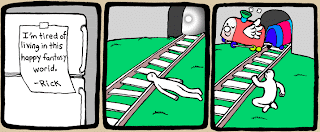
"The Perry Bible Fellowship"
True to its ironic name, the PBF is a dark, Eisner-winning comic strip drawn by New York artist Nicholas Gurewitch. The strip sees hardly any new additions, as Gurewitch stopped posting in February '08 to "do other things." But the archive is well worth a look if you share a black sense of humor.
("Suicide Train" by Nicholas Gurewitch)
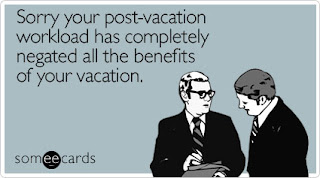
"Someecards.com"
Someecards should be everyone's first stop for funny, inappropriate e-cards. Birthdays, holidays, workplace humor - all topics receive democratic treatment. "When you care enough to hit send" is their tagline but even if you particularly don't, the site is wonderfully amusing.
(from someecards.com)
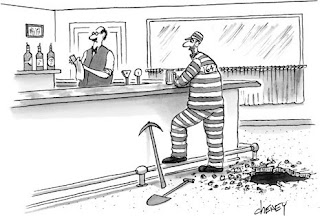
"The New Yorker Caption Contest"
A weekly contest gives readers a chance to submit their own captions to pre-drawn comics and vote on the top three. (For those of you interested in actually winning, check out Slate's how-to penned by a former champion).
(from contest #178, drawing by Tom Cheney)
"The Perry Bible Fellowship"
True to its ironic name, the PBF is a dark, Eisner-winning comic strip drawn by New York artist Nicholas Gurewitch. The strip sees hardly any new additions, as Gurewitch stopped posting in February '08 to "do other things." But the archive is well worth a look if you share a black sense of humor.
("Suicide Train" by Nicholas Gurewitch)

"Someecards.com"
Someecards should be everyone's first stop for funny, inappropriate e-cards. Birthdays, holidays, workplace humor - all topics receive democratic treatment. "When you care enough to hit send" is their tagline but even if you particularly don't, the site is wonderfully amusing.
(from someecards.com)

"The New Yorker Caption Contest"
A weekly contest gives readers a chance to submit their own captions to pre-drawn comics and vote on the top three. (For those of you interested in actually winning, check out Slate's how-to penned by a former champion).
(from contest #178, drawing by Tom Cheney)

Friday, January 30, 2009
"Protecting my investment" and other pet peeves
As a part-time salesperson in a computer store, I have a few pet peeves about dealing with customers and consumer electronics. Just allow me to vent:
1. Customers looking for the perfect product - No matter how long or arduous your search, the perfect product is never to be found. It is amazing how many people pop in to the store with their iPhone or iPod, searching for the perfect case, who subsequently explain to me: "I just want to protect my investment." I desperately want to respond: "I'm sure you'll see a return on that 'investment' very soon." I have opened hundreds of cases for hundreds of finicky customers and none of them are ever totally satisfied with what they inevitably buy. It's a waste of time and energy for them and I.
2. Customers complaining about the cost of iPhone accessories - At the forefront, I am always surprised by people willing to spend $300 on a cell phone (no matter how many functions it has). And yet, after spending half a month's rent on such a device, these are the people who complain about a $15 wall charger. iPhones are expensive. Apple products are expensive. If you aren't prepared to spend liberally, don't buy a consumer product that demands just that.
3. Customers merely looking to spend money - It is absolutely astonishing how many people waltz in and say to me: "What's cool? What can I buy?" I understand that I, as a salesperson, should feel incredibly lucky to have customers like this - and if worked on commission, maybe I would - but it only serves to annoy me. What should you do with your extra money? Buy your wife flowers. Donate to a local charity. It's an entirely judgmental statement, but almost anything would be a better use of money than buying a faster router so that you can watch youtube with less lag time.
There, I've complained enough. Now I feel a little like Peter Griffin from "Family Guy" doing his 'What Grinds My Gears' bit ---
1. Customers looking for the perfect product - No matter how long or arduous your search, the perfect product is never to be found. It is amazing how many people pop in to the store with their iPhone or iPod, searching for the perfect case, who subsequently explain to me: "I just want to protect my investment." I desperately want to respond: "I'm sure you'll see a return on that 'investment' very soon." I have opened hundreds of cases for hundreds of finicky customers and none of them are ever totally satisfied with what they inevitably buy. It's a waste of time and energy for them and I.
2. Customers complaining about the cost of iPhone accessories - At the forefront, I am always surprised by people willing to spend $300 on a cell phone (no matter how many functions it has). And yet, after spending half a month's rent on such a device, these are the people who complain about a $15 wall charger. iPhones are expensive. Apple products are expensive. If you aren't prepared to spend liberally, don't buy a consumer product that demands just that.
3. Customers merely looking to spend money - It is absolutely astonishing how many people waltz in and say to me: "What's cool? What can I buy?" I understand that I, as a salesperson, should feel incredibly lucky to have customers like this - and if worked on commission, maybe I would - but it only serves to annoy me. What should you do with your extra money? Buy your wife flowers. Donate to a local charity. It's an entirely judgmental statement, but almost anything would be a better use of money than buying a faster router so that you can watch youtube with less lag time.
There, I've complained enough. Now I feel a little like Peter Griffin from "Family Guy" doing his 'What Grinds My Gears' bit ---
Wednesday, January 28, 2009
A few other cents on sports & sportsmanship
By now, most of you have probably read the recent news story of the Dallas, Texas high school (Covenant) which beat another crosstown rival (Dallas Academy) 100-0 in a horribly mismatched basketball game. The game was 59-0 at the end of the first half and the girls on the Covenant side seemed particularly eager to reach the 100-point mark by the end of the game. Since the story broke, Covenant apologized for their team's conduct and sought to forfeit the game, calling the win "shameful." Now, the coach of the Covenant girls' basketball team has been fired after disagreeing with the administration's statement.
There may be no right answer to the moral puzzle presented here. In a fairer world, Dallas Academy (which has not won a game in the past four years) would not have played a state-championship contender like Covenant. In fairer world, the Dallas coach would have forfeit the game at halftime and praised his girls for their tenacity. Finally, in a fairer world the Covenant squad would have scored a handful of points and, subsequently, no one would have talked about this game after it ended.
But none of these things happened. One team won and one team lost. Badly. As such, it's raised a multitude of ethical questions (most of which can be applied to any sport, regardless of the school or league): Should a winning team stop their scoring attempts once they've built an insurmountable lead? In such a situation, should one of the coaches make an attempt to stop the game? Is it right to forfeit a contest with so lopsided a conclusion?
Personally, I think all these questions return to the problem of pity, which is why I would answer (respectively) no, not necessarily, and no to the questions posed above. As a person who has played on many a losing team, I would argue that the last thing a failing team wants is pity. It's demeaning and it shouldn't be mistaken for mercy (which is an act of love). And for those Covenant girls to practice passing drills for forty-eight minutes or to dribble circles around the Dallas team without scoring, that's exactly what it would have been - demeaning. Additionally, the Covenant administration's move to forfeit the game is demeaning. I will be the first to praise the Dallas team for their fortitude in the face of such adversity - consider how few of us would willingly have played the entire game - but it insults the players to say they "won" in any conventional sense. It's unrealistic and it attempts to refute the valuable lesson learned here. Dallas Academy lost but they lost after playing with incredible vigor and tenacity. Very few competitors could say they would have done the same.
There may be no right answer to the moral puzzle presented here. In a fairer world, Dallas Academy (which has not won a game in the past four years) would not have played a state-championship contender like Covenant. In fairer world, the Dallas coach would have forfeit the game at halftime and praised his girls for their tenacity. Finally, in a fairer world the Covenant squad would have scored a handful of points and, subsequently, no one would have talked about this game after it ended.
But none of these things happened. One team won and one team lost. Badly. As such, it's raised a multitude of ethical questions (most of which can be applied to any sport, regardless of the school or league): Should a winning team stop their scoring attempts once they've built an insurmountable lead? In such a situation, should one of the coaches make an attempt to stop the game? Is it right to forfeit a contest with so lopsided a conclusion?
Personally, I think all these questions return to the problem of pity, which is why I would answer (respectively) no, not necessarily, and no to the questions posed above. As a person who has played on many a losing team, I would argue that the last thing a failing team wants is pity. It's demeaning and it shouldn't be mistaken for mercy (which is an act of love). And for those Covenant girls to practice passing drills for forty-eight minutes or to dribble circles around the Dallas team without scoring, that's exactly what it would have been - demeaning. Additionally, the Covenant administration's move to forfeit the game is demeaning. I will be the first to praise the Dallas team for their fortitude in the face of such adversity - consider how few of us would willingly have played the entire game - but it insults the players to say they "won" in any conventional sense. It's unrealistic and it attempts to refute the valuable lesson learned here. Dallas Academy lost but they lost after playing with incredible vigor and tenacity. Very few competitors could say they would have done the same.
My two cents on an embattled mayor
In terms of Portland-area news, I may be weighing in on this debate a tad late but for those of you who aren't aware of our current political "scandal", here's a rundown: Sam Adams, Portland's newly elected mayor, has recently come under fire for his short-lived relationship with an eighteen-year-old legislative intern in the summer of 2007. Until two weeks ago, Adams had repeatedly stated that his relationship with the intern was only one of friendship and professional mentoring. But after a particularly in-depth report by a local alternative newspaper, Adams admitted that he had lied about the nature of the relationship. It had been, he admitted, consensually sexual and he first lied about it because he thought it would create an unwelcome focal point in the mayoral race. Some Portland residents have been outspoken about their desire to see Adams resign, while others have staunchly supported his decision to remain in office. The most prevalent ammunition hurled by detractors is not the relationship itself but Adams' act of lying.
I may be stealing a response from incoming U.S. Attorney General Eric Holder, but in regards to the query of whether or not it's wrong that Adams lied, I believe it's impossible to answer the question without questioning the premise. Adams relationship with the intern may have not have been commendable but, nevertheless, it was perfectly legal. Their contact was consensual and the intern was over eighteen and did not work for him. So, it must be asked, why the initial questions about the relationship? Couldn't Adams simply have said that the matter was personal and, thus, not open for discussion? I understand that there are other issues at play here (e.g. questions of unethical reciprocity) but in terms of the first lie, I can't condemn Adams any more than I can someone who lies about a past infidelity to a nosy neighbor. If we demand more government transparency, and expect politicians to answer increasingly personal questions, we shouldn't be surprised to discover very typical, very human flaws.
I may be stealing a response from incoming U.S. Attorney General Eric Holder, but in regards to the query of whether or not it's wrong that Adams lied, I believe it's impossible to answer the question without questioning the premise. Adams relationship with the intern may have not have been commendable but, nevertheless, it was perfectly legal. Their contact was consensual and the intern was over eighteen and did not work for him. So, it must be asked, why the initial questions about the relationship? Couldn't Adams simply have said that the matter was personal and, thus, not open for discussion? I understand that there are other issues at play here (e.g. questions of unethical reciprocity) but in terms of the first lie, I can't condemn Adams any more than I can someone who lies about a past infidelity to a nosy neighbor. If we demand more government transparency, and expect politicians to answer increasingly personal questions, we shouldn't be surprised to discover very typical, very human flaws.
Monday, January 26, 2009
Another bit of Vonnegut
I don't mean to discuss him ad nauseam, but I rediscovered a great article on the A.V Club today that I thought worth sharing: "15 Things Kurt Vonnegut Said Better Than Anyone Else Ever Has Or Will". I think I enjoy lists like this because they acknowledge the splendid things I fail to mention or, at the very least, commit to memory. My favorite quotes appear below (with their respective novels):
"I urge you to please notice when you are happy, and exclaim or murmur or think at some point, 'If this isn't nice, I don't know what is.'"
`from A Man Without A Country. I talked about this sentiment in an earlier post but I figured I'd at least identify the novel - plus it's one of the few hopeful moments in Vonnegut's otherwise bitter swan song.
"There are plenty of good reasons for fighting, but no good reason ever to hate without reservation, to imagine that God Almighty Himself hates with you, too. Where’s evil? It’s that large part of every man that wants to hate without limit, that wants to hate with God on his side. It’s that part of every man that finds all kinds of ugliness so attractive...It’s that part of an imbecile...that punishes and vilifies and makes war gladly."
`from Mother Night. Possibly my second favorite novel of his, it has a wonderfully dark sense of humor and more than a few pearls of wisdom. Darker still, these judgments are most often presented by an exiled American accused of disseminating Nazi propaganda.
"Hello, babies. Welcome to Earth. It's hot in the summer and cold in the winter. It's round and wet and crowded. At the outside, babies, you've got about a hundred years here. There's only one rule that I know of, babies — God damn it, you've got to be kind."
`from God Bless You, Mr. Rosewater. Probably Vonnegut's shortest summation of his personal ethos, this quote comes from my all-time favorite KV novel. Though I don't consider myself a secular humanist, nor do I think this little book provides his best quotes, I dearly love the story. Eliot Rosewater is a character for the ages. He’s Christ-like, but much more human than Christ. A drunk with an intense interest in local fire-protection, a dreamer, a giver, a slob, and possibly a madman (at least, part of the time). Maybe Mr. Rosewater doesn’t reflect Jesus as much as he does John the Baptist – a recluse nearly alone in the wilderness, save for the hordes of pathetic, repenting souls who come to him for help and healing.
"I urge you to please notice when you are happy, and exclaim or murmur or think at some point, 'If this isn't nice, I don't know what is.'"
`from A Man Without A Country. I talked about this sentiment in an earlier post but I figured I'd at least identify the novel - plus it's one of the few hopeful moments in Vonnegut's otherwise bitter swan song.
"There are plenty of good reasons for fighting, but no good reason ever to hate without reservation, to imagine that God Almighty Himself hates with you, too. Where’s evil? It’s that large part of every man that wants to hate without limit, that wants to hate with God on his side. It’s that part of every man that finds all kinds of ugliness so attractive...It’s that part of an imbecile...that punishes and vilifies and makes war gladly."
`from Mother Night. Possibly my second favorite novel of his, it has a wonderfully dark sense of humor and more than a few pearls of wisdom. Darker still, these judgments are most often presented by an exiled American accused of disseminating Nazi propaganda.
"Hello, babies. Welcome to Earth. It's hot in the summer and cold in the winter. It's round and wet and crowded. At the outside, babies, you've got about a hundred years here. There's only one rule that I know of, babies — God damn it, you've got to be kind."
`from God Bless You, Mr. Rosewater. Probably Vonnegut's shortest summation of his personal ethos, this quote comes from my all-time favorite KV novel. Though I don't consider myself a secular humanist, nor do I think this little book provides his best quotes, I dearly love the story. Eliot Rosewater is a character for the ages. He’s Christ-like, but much more human than Christ. A drunk with an intense interest in local fire-protection, a dreamer, a giver, a slob, and possibly a madman (at least, part of the time). Maybe Mr. Rosewater doesn’t reflect Jesus as much as he does John the Baptist – a recluse nearly alone in the wilderness, save for the hordes of pathetic, repenting souls who come to him for help and healing.
Subscribe to:
Posts (Atom)


 Posts
Posts


